
Home » Intro to Nunavut » Nunavut History
Nunavut History
Nunavut — “our land” in the Inuktitut language — has been home to Inuit for millennia and part of Canada for more than a century, as the newest and youngest Canadian territory.
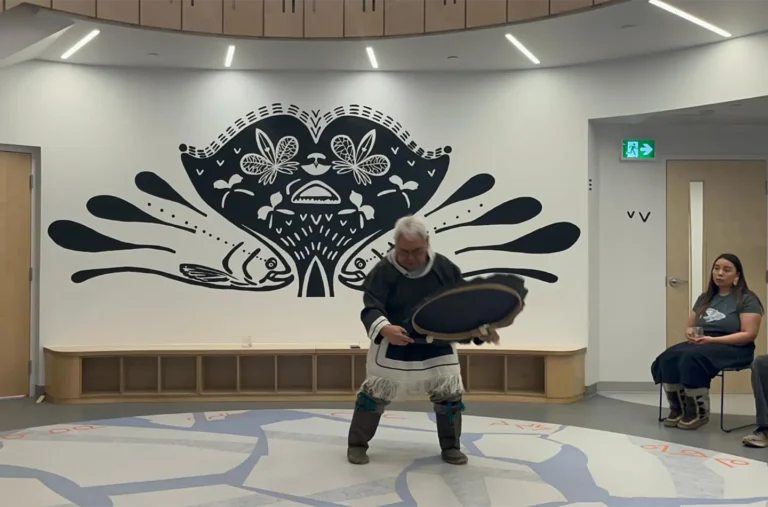
The creation of Nunavut was the result of decades of negotiation and advocacy, culminating in 1993’s Nunavut Land Claims Agreement, which recognized Inuit land rights and aimed to promote economic development and cultural preservation.
Embracing both traditional knowledge and values and the new opportunities presented by technologies like the Internet, the Government of Nunavut now provides a wide range of services tailored to the unique needs of a growing population of over 37,000 residents living in 25 communities which are broken down into three regions spread over 2 million square Kilometres (1/5 of Canada).
The establishment of settlements in Nunavut was shaped by Canadian government policies that, starting after World War II, aimed to integrate Inuit into the national economy and assert sovereignty in the Arctic. These efforts led to the transition of Inuit from a nomadic lifestyle to life in centralized communities, often through controversial relocations. While intended to provide essential services and promote economic development, these policies frequently disregarded Inuit culture and traditional practices, resulting in significant social disruption and long-term challenges for Inuit communities”.
Further Reading
Duffy, R. Quinn – The Road to Nunavut: The Progress of the Eastern Arctic Inuit Since the Second World War (1988). This book provides a comprehensive history of the Inuit in the Eastern Arctic, covering the impact of Canadian settlement policies and the transition to modern governance.
Bonesteel, Sarah – Canada’s Relationship with Inuit: A History of Policy and Program Development (2006). This work provides a detailed look at the Canadian government’s policies towards Inuit, including settlement history and the development of programs affecting Inuit communities.
Tester, Frank James, and Kulchyski, Peter – Tammarniit (Mistakes): Inuit Relocation in the Eastern Arctic, 1939-63 (1994). This book examines the relocation of Inuit communities by the Canadian government and the social impacts of these policies.
Qikiqtani Truth Commission – Thematic Reports and Testimonies (2013). The reports from the Qikiqtani Truth Commission provide insight into the effects of government policies on Inuit life in the Baffin region, including settlement, relocation, and adaptation.
Royal Commission on Aboriginal Peoples (RCAP) – The High Arctic Relocation: A Report on the 1953-55 Relocation (1994). This report covers the controversial relocations of Inuit from Northern Quebec to the High Arctic, providing context for the broader history of Inuit settlement and resettlement.